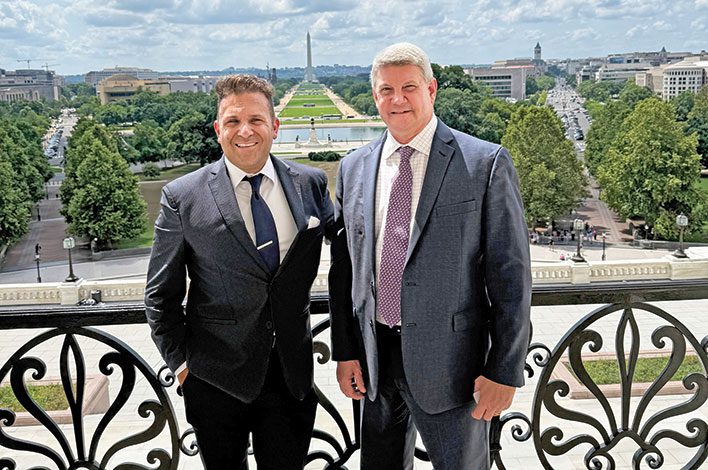
President and CEO Nick Rhoad Represents Precast at the Highest Levels of Government
In a landmark week for the National Precast Concrete Association (NPCA), President and CEO Nick Rhoad joined forces with the Construction Leadership Council in Washington, D.C., to champion key legislative priorities affecting precasters across the country. This high-level advocacy effort focused on critical topics such as project labor agreements (PLAs), immigration reform and the emerging threat of foreign precast concrete imports undermining American producers.
Influencing Policy from the Ground Up
Rhoad and president and CEO of the Precast/Prestressed Concrete Institute (PCI) Bob Risser joined representatives of more than 20 national construction associations at the U.S. Department of Labor for a meeting with Deputy Undersecretary Keith Sonderling and a number of senior staff.
The conversation included opposition to federally mandated PLAs, which limit competition and increase project costs. The construction coalition made a clear case against these mandates, highlighting their negative impact on workforce flexibility and small- to mid-sized contractors. Immigration reform — especially around temporary visa programs — also was raised as a pressing workforce issue.
“We received direct confirmation that decisions on project labor agreements are being handled at the White House level,” said Rhoad. “So that’s exactly where we will focus future efforts.”
At the White House: A Unified Voice for Precast
In a historic moment for NPCA, Rhoad and Risser met with the White House Office of Public Liaison. This marks the first known White House meeting for NPCA leadership and was arranged by the new joint lobbyist for the two organizations, Matt Morgan of Barnes & Thornburg. Rhoad and Risser presented concerns about foreign-made precast products entering the U.S. marketplace without quality traceability, often circumventing tariffs and undercutting domestic producers.
“We explained that it doesn’t matter if the products are prestressed piles or other elements,” Rhoad said. “What matters is that unverified precast is being used in American infrastructure—products that are potentially poor quality and could compromise American infrastructure and damage the reputation of the product and the industry.”