Tracking precast concrete production from estimating through delivery can feel a lot like directing traffic at a busy intersection. Except that instead of cars flying by within inches of you, it’s schedules, crews, materials and deadlines that can’t be managed using a whistle and some fast hand signals.
There are details to get straight, team members to coordinate, clients to report to and timelines to lock in before any actual design or production even begins. Then come the molds, pours, quality control, inspection, delivery and everything else that goes into a successful project.
The good news is that even minor tracking improvements can help plants run more efficiently, improve safety and keep production moving. Pink Precast in Ontario and Garden State Precast in New Jersey are two NPCA members that recently took first and third place, respectively, in the 2026 Best Practices Awards for their project tracking approaches.
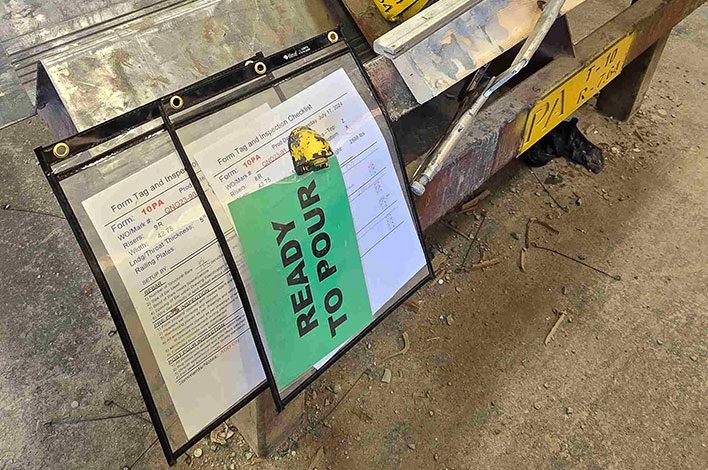
Pink Precast uses a visual management system that makes work, status and responsibility immediately visible on the production floor, while Garden State Precast developed a method for tracking and checking multiple products as they move through different stages of production.
Here’s how the two companies use their innovative project tracking processes on the production floor.
PINK PRECAST’S VISUAL SYSTEM
Minimizing Walking, Asking and Paperwork
Walk Pink Precast’s production floor and you’ll see well-defined work zones; a color-coded floor map; tools and bins aligned by area; and centralized communication boards and updates. Team members participate in daily check-ins that help keep everyone on the same page and reduce the need for constant checking and rechecking throughout the day.
Before the visual system was introduced, project tracking involved a lot of “walking, asking and paperwork,” says Rod Alves, QA and process manager. Because project status wasn’t always visible, crews had to stop working to confirm what was ready, what was on hold and what needed attention.
“This created delays, interruptions and unnecessary back-and-forth,” he adds.
The precaster was also dealing with routine decisions that took too long and interfered with project progress. Some of those decisions required workers to leave their stations, walk to the office, wait for clarifications or rely on printed drawings kept in the production office.
“Paper-based inspections and delayed exchanges between QC, engineering and production often slowed down setups and contributed to preventable rework,” Alves explains.