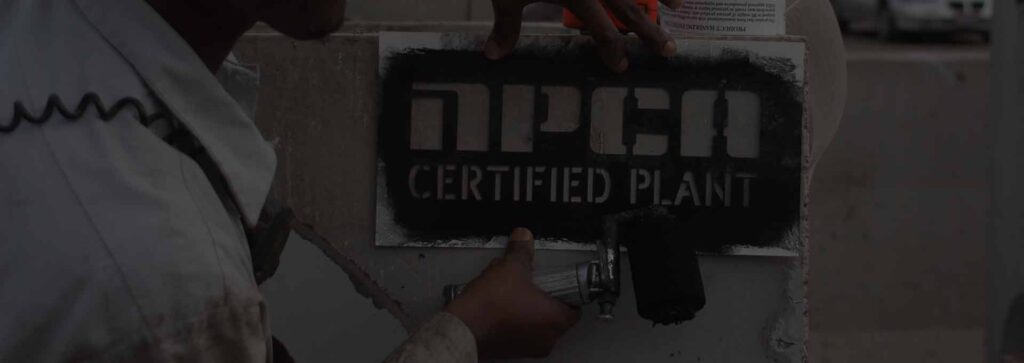
There are many benefits for precast concrete producers who participate in the Plant Certification Program. These benefits include:
9th Edition Now Online!
Download the 9th Edition QC Manual
Safety
The NPCA Quality Control Manual for Precast and Prestressed Concrete Plants does not claim or imply that it addresses safety-related issues associated with its use. Manufacture of concrete products may involve the use of hazardous materials, operations and equipment. It is the user’s responsibility to determine appropriate safety, health and environmental practices and applicable regulatory requirements associated with the use of this manual and the manufacture of concrete products.
Product Performance
Use of the NPCA Quality Control Manual for Precast and Prestressed Concrete Plants does not guarantee the proper function or performance of any product manufactured in accordance with the requirements contained in the manual. Routine conformance to the requirements of this manual should result in products of an acceptable quality according to current industry standards.
Copyright
No part of this manual may be reproduced in any form without permission in writing from the NPCA, the association of the manufactured concrete products industry.
Copyright 2012 by NPCA
9th Edition, 2012
All rights reserved.
The NPCA Quality Control Manual for Precast and Prestressed Concrete Plants is the most reliable quality management tool available for the precast concrete industry. Its use in day-to-day plant operations allows management and production personnel to understand and meet the requirements for producing quality precast and prestressed concrete. The manual’s practical information and adherence to accepted industry standards helps provide consistency throughout a plant’s operations.
Specifiers and users of precast concrete products are constantly seeking ways to identify high quality products. The NPCA Plant Certification Program is based on the premium quality control program outlined in this manual and is intended to assure that precast and prestressed concrete plants are capable of manufacturing quality products.
Guide Specifications
NPCA is dedicated to high quality standards in the manufacturing of precast concrete products. With its relatively low cost, extremely long product life, modularity and an environmentally friendly manufacturing process, precast concrete is the ideal material for many construction applications. The NPCA Guide Specifications for Precast Concrete – found on our Technical Services page – were developed by the NPCA Quality Assurance Committee and approved by the NPCA Board of Directors.
NPCA Plant Certification Deficiencies Response Form
Helpful Hints:
To submit your response electronically, please complete this form.
Plant Certification Update Luncheon – 46th Annual Convention

Plant Certification FAQs
Q: What is the NPCA Plant Certification Program?
A: The NPCA Plant Certification Program is an exciting way for precast and prestressed concrete plants to demonstrate their commitment to production of high-quality products. The basis of this voluntary certification program is the Quality Control Manual for Precast and Prestressed Concrete Plants (NPCA Quality Control Manual) published by NPCA. The program covers all aspects of a precast operation necessary for quality assurance during the production of high-quality precast or prestressed concrete products. Compliance with the Quality Control Manual is verified through annual inspections of certified plants. The program certifies that plants meeting the requirements set forth in the NPCA Quality Control Manual are capable of producing high-quality products. The program does not certify products themselves.
Q: What products are covered in the NPCA Quality Control Manual?
A: Virtually all precast concrete products composed of both normal and no-slump (dry-cast) concrete, including prestressed, are covered in the manual. Typically, NPCA certified plants produce precast and prestressed components that can be classified into one of the following categories:
Q: Why should a precast concrete plant consider becoming certified under the NPCA Plant Certification Program?
A: There are many benefits to precasters who participate in the Plant Certification Program, including:
Q: What is the process of becoming certified?
A: To begin the process, a plant must first complete the application/contract for NPCA Plant Certification and return it, along with the required payment, to NPCA. A copy of this application/contract can be obtained directly from NPCA by calling (800) 366-7731 or at www.precast.org/npca-plant-certification-resources. The inspection agency will then contact the plant to schedule the inspection. During the inspection, plant personnel have the opportunity to accompany the inspector and learn of possible operation and plant improvements. The inspection agency then provides written reports of its findings, suggestions for improvement and corresponding grading schedule to the plant.
Q: How long does it take for a precast plant to become certified?
A: The initial certification process takes about six weeks from the time a plant’s application is received, through the plant inspection and notification of results. NPCA will make every effort to accommodate plants that need an expedited inspection. Please note all plants must be inspected within 90 days of application, or 180 days of application if participating in NPCA’s voluntary pre-assessment audit program.
Q: How often are inspections performed?
A: Inspections are performed at each participating plant once per year. Each year 5 percent of the plants participating in the NPCA Plant Certification Program will receive an additional unannounced inspection at NPCA’s expense as a commitment to quality and continuous improvement for the program.
Q: When are inspections performed?
A: Initial inspections are scheduled between the plant and the inspector on a mutually convenient date, within the 90-day window from application (or 180 days for plants in the voluntary NPCA Pre-assessment audit program). Subsequent inspections are performed on an unannounced basis, and can occur any time during the year. NPCA makes every effort to avoid scheduling inspections during NPCA meetings such as the Annual Convention and NPCA’s annual trade show.
Q: Who performs the inspections?
A: A representative from one of two independent engineering firms performs the on-site plant audits. This representative is responsible for scheduling and performing the inspection and then providing a report to NPCA detailing the inspection findings and grade.
Q: What is required to pass an inspection?
A: Inspections are performed to verify compliance with the NPCA Quality Control Manual. A standard grading schedule included in the manual is used for all inspections. A plant must achieve a score of 75 points or better (out of a possible 100) in order to pass.
Q: What should a plant expect during an inspection?
A: The inspector will begin the plant’s audit in the morning, typically when stripping operations are still being carried out. It is best to designate a plant representative to be the liaison to the inspector during the entire inspection process. The inspector will observe typical operations that include all normal production operations and quality control testing. The inspector will also review all required quality control documentation. At the conclusion of the audit, the inspector will conduct an exit interview and will provide immediate feedback with plant representatives regarding initial findings. These meetings usually last about an hour and are conducted casually in order to facilitate positive discussion. This is one of the best opportunities for plant representatives to ask questions and take note of the inspector’s positive and constructive comments.
Q: What topics does the Plant Certification Program cover?
A: All of the requirements for the program are clearly described in the NPCA Quality Control Manual for Precast and Prestressed Concrete Plants. The general topics covered include:
Q: What is the best way for a plant to prepare for an inspection and become certified?
A: Thoroughly review the NPCA Quality Control Manual. This manual covers all of the requirements for the program and is the basis for the inspections. If plant personnel have further questions after reading the manual, they can contact the NPCA Technical Services Department for assistance.
Q: What if a precast concrete company has more than one plant?
A: The purpose of the NPCA Plant Certification Program is to certify individual production facilities. If a company has more than one plant operating in different locations, each plant must apply for certification and receive a separate inspection.
Q: How difficult is it to pass an inspection?
A: Passing the inspection is not as difficult as you may think. In general, companies that are interested in the Plant Certification Program already have the inherent characteristic found in other successful plants – a commitment to quality. These plants will likely perform very well during an inspection, since they are already performing many of the quality control operations required in the NPCA Quality Control Manual.
Q: What is the best indicator that a plant will likely pass an inspection?
A: Management’s commitment to quality is fundamental for a plant seeking to develop a successful quality assurance/quality control program. Without this commitment, most QA/QC programs will likely fail.
Q: Must a plant be a member of NPCA to participate in the Plant Certification Program?
A: No. A plant need not be a member of the association to be certified. However, it is in the plant’s best interest to join NPCA in order to take advantage of the extensive benefits, discounts and technical assistance NPCA has to offer.
Q: Is it cost effective to be certified?
A: In most cases, yes. Numerous plants have indicated that plant certification actually pays for itself through increased operating efficiencies, reduction of defective and returned products and increased business due to better customer satisfaction. Compared to the cost of other industry certification programs, the NPCA Plant Certification is very inexpensive.
Prestressed Certification FAQs
Q: Why has NPCA created a Prestress Certification Program?
A: NPCA’s Prestress Certification Program is a natural expansion of NPCA’s already mature Precast Concrete Certification Program. As a representative of manufacturers that produce precast, prestressed and concrete pipe products, NPCA’s mission is to raise quality standards throughout the industry. The Prestress Certification Program provides prestressed concrete producers an additional option in the marketplace for independent third-party certification of their plants. NPCA supports all third-party certification efforts for the industry because they raise the quality standards while minimizing the inspection burden for specifiers and regulators.
Q: When was it launched?
A: The Prestress Certification Program was approved in the fall of 2007.
Q: Who created the Prestress Certification requirements?
A: NPCA’s Quality Assurance Committee, with the support of the NPCA Technical Committee oversaw the development of the Prestress Certification Program, which is an extension of NPCA’s long-standing, nationally recognized Precast Certification Program. As part of NPCA’s commitment to developing a rigorous and thorough certification program, NPCA consulted closely with two ENR Top 500 design firms; several state DOT organizations; multiple prestressed concrete manufacturers; and professors with several top civil engineering university programs.
Q: How is the Prestress Certification Program similar to the Precast Certification Program?
A: The two programs are parts of the same whole. The Prestress Certification Program quality requirements are in addition to NPCA’s Precast Certification Program. In order to earn a Prestress Certification designation a plant must meet all applicable requirements in the current NPCA Quality Control Manual for Precast and Prestressed Concrete Plants (NPCA QC Manual) in addition to the requirements of the Prestress Certification Program. These additiona requirements are highlighted in blue text in chapters 1-6 of the NPCA QC Manual.
Q: How does the Prestress Certification Program differ from the Precast Certification Program?
A: In addition to the requirements specific to prestressed concrete, the Prestress Certification Program will conduct two unannounced inspections annually. The Precast Certification Program will continue to have one unannounced inspection each year. In addition to these required inspections, NPCA conducts an additional unannounced inspection at 5 percent of the plants participating in the program. These inspections are conducted at no additional cost to the plants, and are an added measure of quality control for the program.
Q: How much does the Prestress Certification Program cost?
A: The annual prestress certification fee for NPCA members is $12,000, which includes the fee for plant certification. The fee for nonmembers is $17,000. This fee includes at least two inspections per year. The fee for precast certification only (without prestressed) will continue to be $3,450 for NPCA members and $6,000 for nonmembers, and will include at least one inspection annually.
Q: Who performs the inspections?
A: A representative from one of two independent engineering firms performs the on-site plant audits. This representative is responsible for scheduling and performing the inspection. The inspector then provides a report to NPCA detailing the inspection findings and grade. NPCA will forward the report to the plant.
Q: What resources does NPCA have to help me prepare for the Prestress Certification Program?
A: NPCA’s Technical Services staff is always willing to discuss the requirements of the program with you, as well as an optional pre-assessment audit program that can help you prepare for the Prestress Certification Program.
Manufacturers of on-site wastewater tanks now have a quality assurance stamp of approval.
Download the Contract & View the FAQs
FAQs
What if my plant is currently NPCA Certified?
Since both programs are based on the NPCA Quality Control Manual for Precast Concrete Plants, NPCA Certified Plants will receive this new certification at their request if they manufacture on-site wastewater products covered in the On-site Wastewater certification Program.
What products are covered by the On-site Wastewater Certification Program?
Septic tanks, risers, distribution boxes, pump tanks/chambers, ATU’s, sewage holding tanks, dosing tanks, dry-wells, wet-wells.
Do I have to be a member of NPCA to participate in the On-site Wastewater Product Certification Program?
Although NPCA membership is encouraged and provides many opportunities to advance your company, it is not a requirement to participate in the On-site Wastewater Certification Program.
How much is the On-site Wastewater Certification Program fee?
The fee for NPCA member companies is $1,995. The fee for non-NPCA member companies is $3,500. There is no additional charge to companies participating in the NPCA Plant Certification Program.
Where do I find the requirements of the On-site Wastewater Certification Program?
The requirements for the On-site Wastewater Certification Program are contained in the latest edition of the NPCA Quality Control Manual for Precast Concrete Plants. The QC Manual is available as a free download at the top of this page.
How will my plant be graded?
The NPCA On-site Wastewater Certification Program has a separate grading schedule that focuses on requirements in the current NPCA Quality Control Manual for Precast Concrete Products that relate to the manufacture of On-site Wastewater Products.
Who will perform the inspections?
Plant inspections will be performed by representatives from the same independent engineering firms that perform the current NPCA Plant Certification Program inspections. These firms are Wiss, Janney, Elstner Associates Inc. (WJE) and Professional Services Inc. (PSI). Both are nationally accredited and well-respected firms.
How often will the inspections occur?
A plant’s initial inspection for certification will be an announced inspection scheduled with the independent engineering firm. All subsequent annual inspections will be unannounced, and plants will be inspected a minimum of once per calendar year.
What is the difference between the On-site Wastewater Certification and the Plant Certification Program?
The On-site Wastewater Certification Program focuses only on those critical manufacturing elements and process requirements that pertain to production of quality, structurally sound and watertight on-site wastewater products.
What does certification do for me?
The program will provide a nationwide quality assurance program to ensure end-users that their septic tanks and other related products are manufactured under strict quality standards. The program will give municipalities, commercial developers and homeowners assurance that the precast concrete components they are purchasing come from a quality manufacturer, will be long-lasting, structurally sound and watertight. The program provides the industry a credible system and symbol confirming that accredited precasters take quality seriously, which will benefit all stakeholders.
Whom do I contact with additional questions on the program?
For general information on Plant Certification or the new On-site Wastewater Certification Program, contact Rich Krolewski.
For technical information on Plant Certification or the new On-site Wastewater Certification Program, contact: Phillip Cutler, P.E..
NPCA’s certified plants will be eligible to receive the certification at no cost. NPCA members who are not certified can apply for the On-site Wastewater Certification Program at a discounted rate of $1,995. Cost to nonmember companies is $3,500.
For more information about NPCA’s Plant Certification Program please contact Richard Krolewski, Director of Certification and Regulatory Services, at (800) 366-7731"We chose to join NPCA's Plant Certification program, even when it was not required of us, because we are committed to producing the highest quality precast possible. It can be very difficult to identify your own faults. But, when an inspector has been through your plant, it is much easier to see and correct your problems after they are spelled out for you in black and white. This program has made us a much better plant."
Mark Thompson,
Jefferson Concrete Corp.
"We feel use of this certification program is a step in the right direction. It has helped to replace our need to hire outside consultants to inspect precast products for us. Also, there has not been a problem getting the precast industry to follow the new requirements. Every plant stepped up to get certified."
Rick Harvey,
Wyoming Dept. of Transportation
"The initial cost of plant certification is minimal when compared to the benefits of focusing on quality control in the plant. We can document savings in raw materials and purchased items, fewer damaged or rejected castings, and reduced labor and rework of products on the job site. The certification program corrects plant errors before they become high cost problems."
John Lendrum,
Norwalk Concrete Industries
"By using NPCA's Plant Certification program, the quality of the precast concrete products supplied on our projects has been maintained, if not improved. Additionally, because the responsibility for quality control has shifted from the state to the precaster, the frequency of our inspections and testing has been greatly reduced. We have found this program to suit our needs very well."
Bill Lawrence,
Utah Dept. of Transportation
"Firebaugh Precast, Inc. has participated in the NPCA Plant Certification program for over 12 years. Plant Certification continues to be a good investment, contributing to our bottom line. Many of our customers and specifiers recognize Plant Certification as ensuring that quality production processes are being followed at our plant. The Quality Control Manual for Precast Concrete Plants also serves as an excellent tool for training employees."
Randy Lindsay-Brisbin,
Firebaugh Precast Inc.
"Many state highway departments used to have enough employees to inspect precast plants themselves. These days, there are fewer and fewer people to do this. It's important to know that a plant is certified and can produce what they say they can--that they offer good business practices."
Joe Ryan,
Maryland State Highway Administration