A Bigger, Stronger Solution: Precast Replaces Failing Culverts Beneath Tennessee Highway
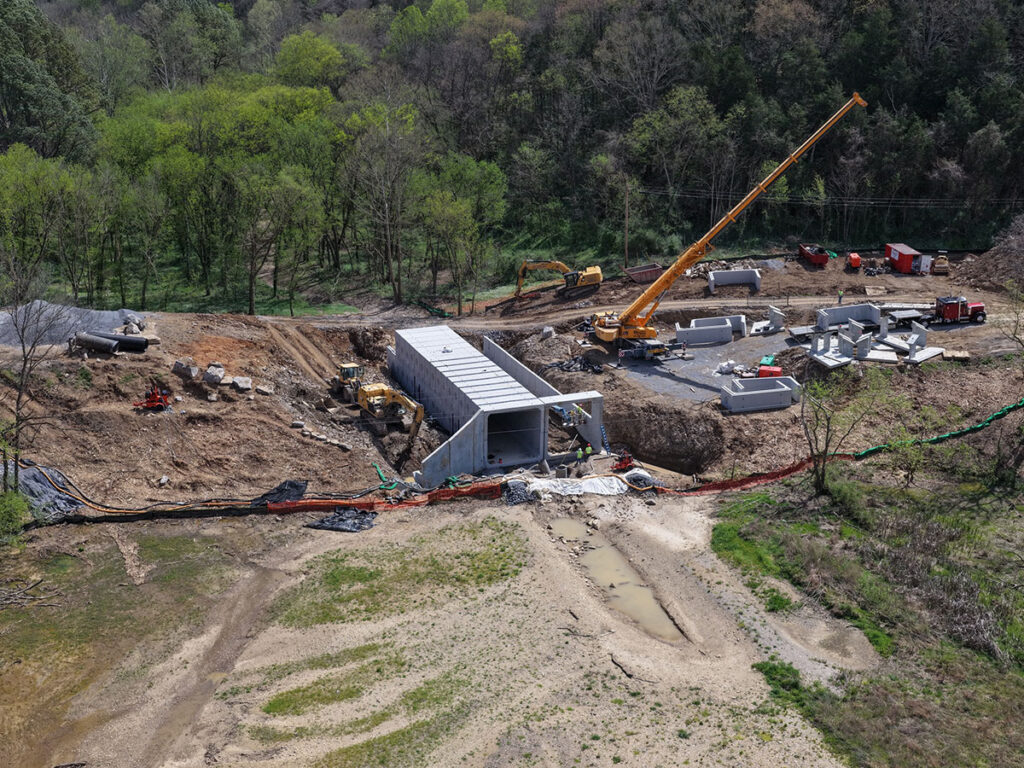
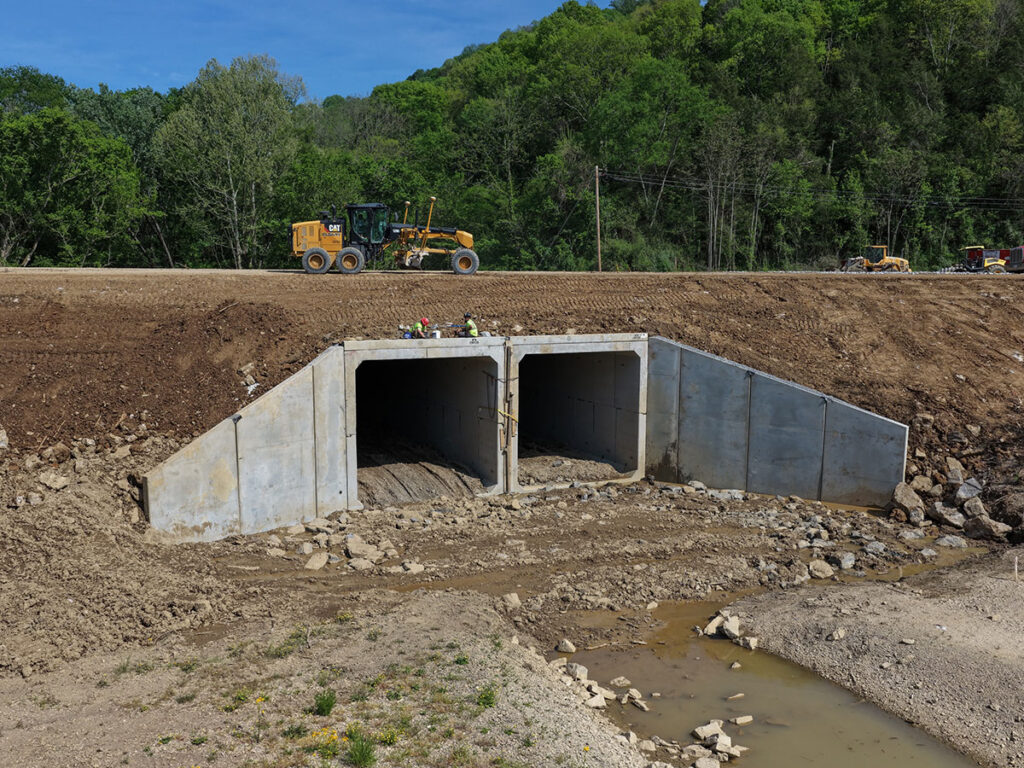
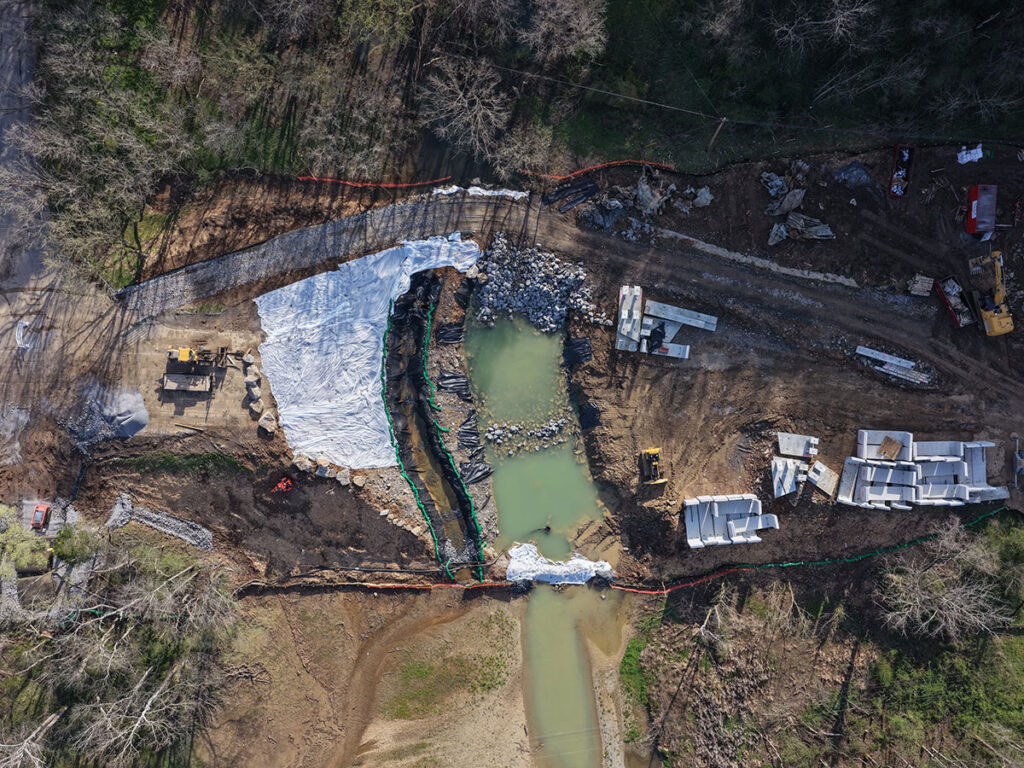
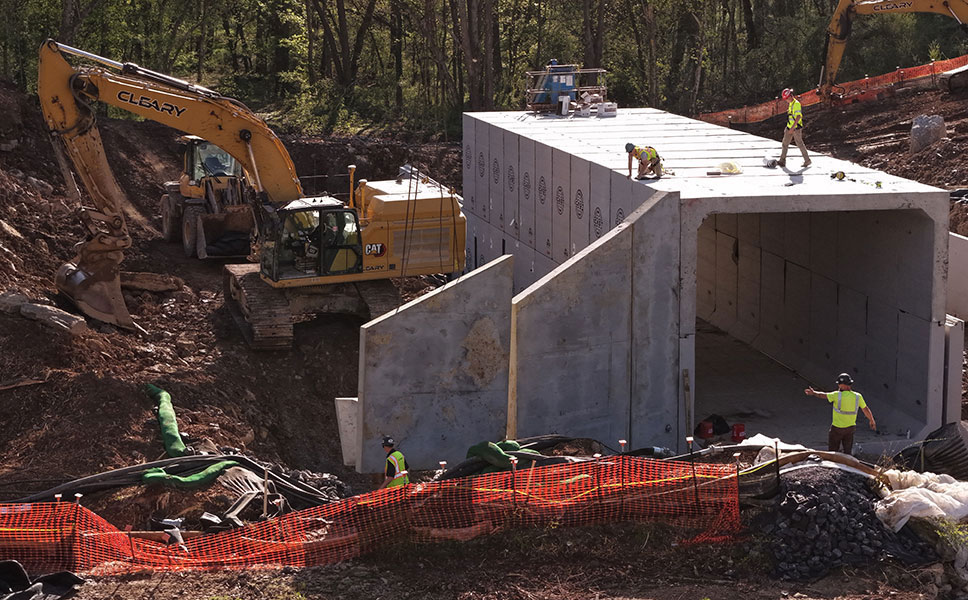
Severely damaged metal culverts beneath State Route 53 in Jackson County, Tennessee, created drainage and infrastructure concerns that required a major replacement. The Tennessee Department of Transportation turned to a reinforced precast concrete box culvert system designed to support heavy highway traffic and provide greater hydraulic capacity. Infrastructure Precast Inc. manufactured 104 feet of double-run box culverts measuring 18 feet by 17 feet, replacing two deteriorating 15-foot-diameter metal culverts beneath approximately 30 to 35 feet of roadway cover. Off-site manufacturing reduced the need for extensive concrete construction within the deep excavation, helping crews complete the project on schedule and reopen the highway in late May 2026.
Fast Facts
- Project Name:
- TDOT Jackson County CNZ250 SR-53 Culvert Replacement
- Location:
- State Route 53 near Hurricane Branch Lane, Gainesboro, Tennessee
- Precast Products Used:
- Box & 3-Side Culverts, Underground
- Precast Producer:
- Infrastructure Precast Inc.
- Completion Date:
- Late May 2026
The Challenge
Two severely damaged, 15-foot-diameter corrugated metal culverts beneath State Route 53 in Jackson County required replacement to address structural deterioration and improve drainage capacity.
The existing culverts were buried beneath approximately 30 to 35 feet of roadway cover, creating a demanding excavation and installation environment. Their replacements needed to support substantial soil loads and highway traffic while providing sufficient capacity to manage stormwater and reduce upstream flooding risks.
Construction also required a temporary closure of State Route 53. Because the roadway serves local travel, property access and commercial traffic, the project team needed to complete the work efficiently and restore connectivity as quickly as possible.
The depth of excavation and size of the replacement structures made conventional on-site concrete forming, reinforcement placement and curing particularly challenging.
Precast Solution
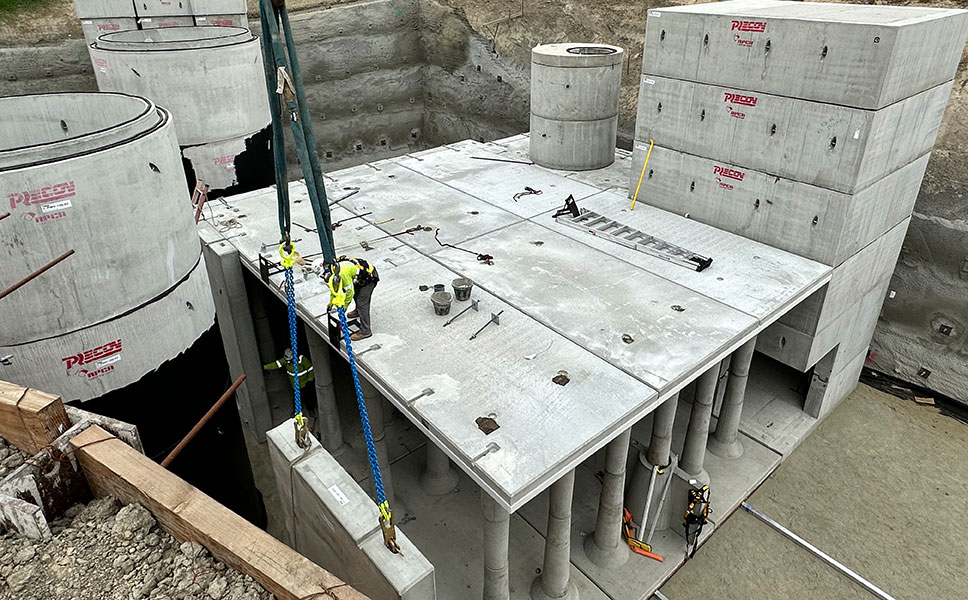
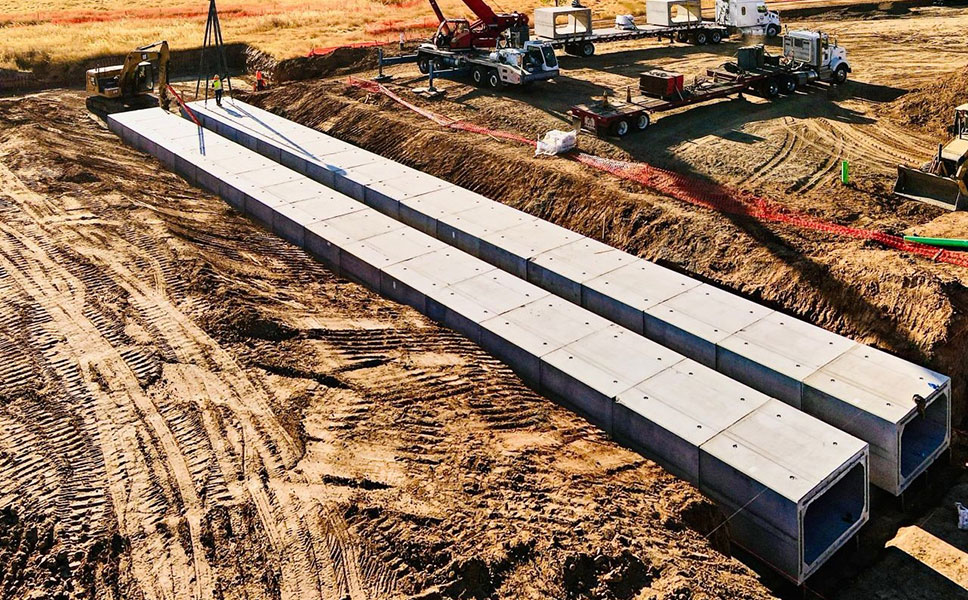
Infrastructure Precast Inc. manufactured a double-run reinforced precast concrete box culvert system for the Tennessee Department of Transportation project.
The replacement consisted of 104 feet of dual 18-foot-by-17-foot box culverts, providing a larger drainage opening than the existing twin 15-foot-diameter corrugated metal pipes.
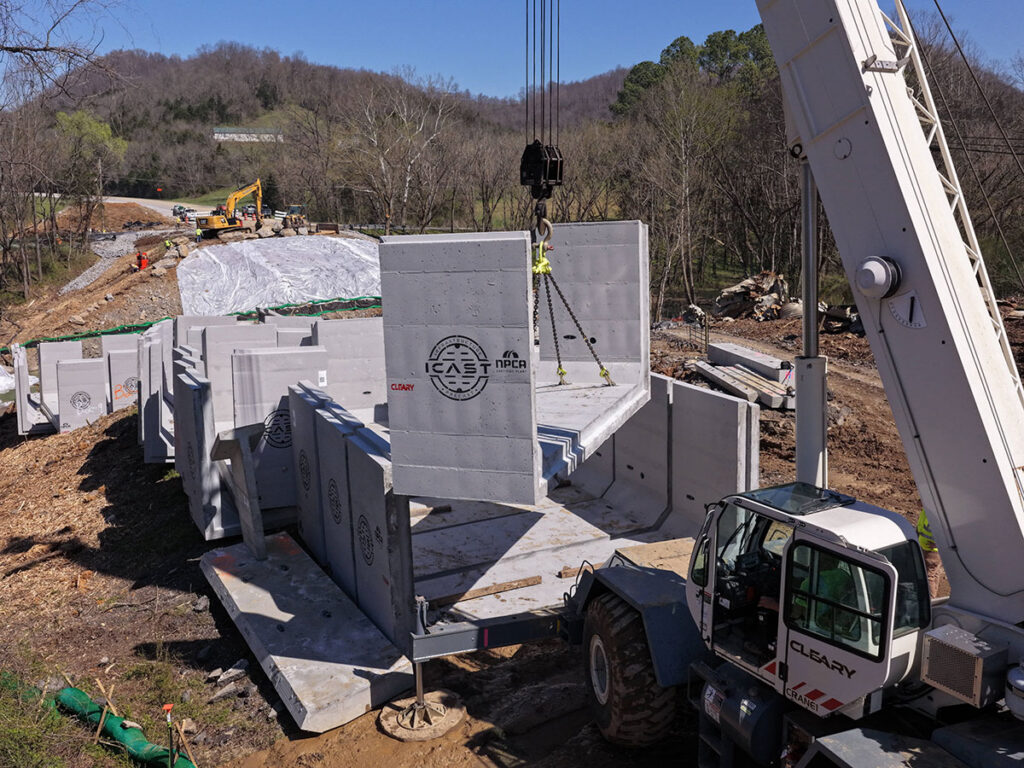
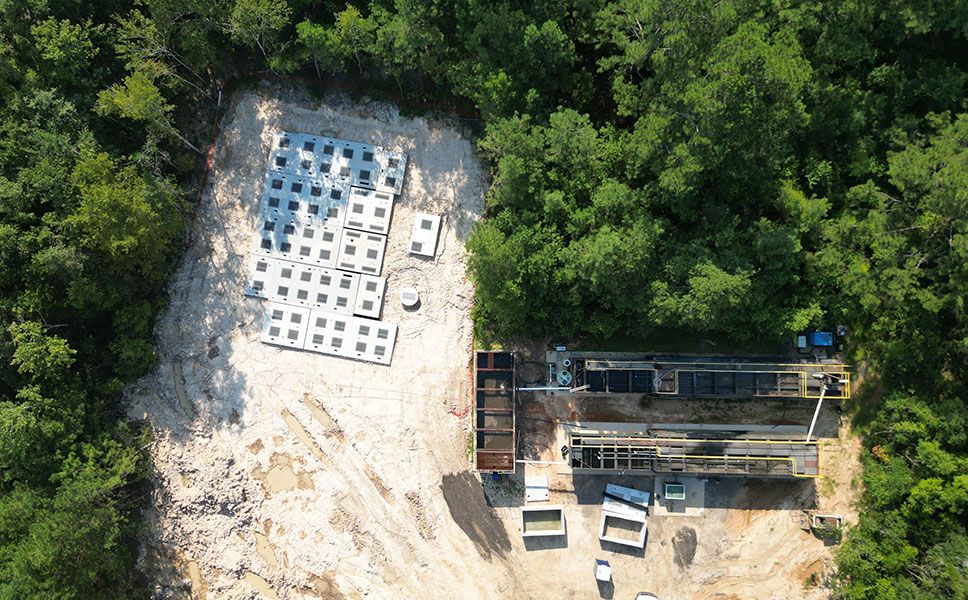
The culvert sections were manufactured off-site in a controlled plant environment, allowing concrete production and quality control to occur independently of field conditions.
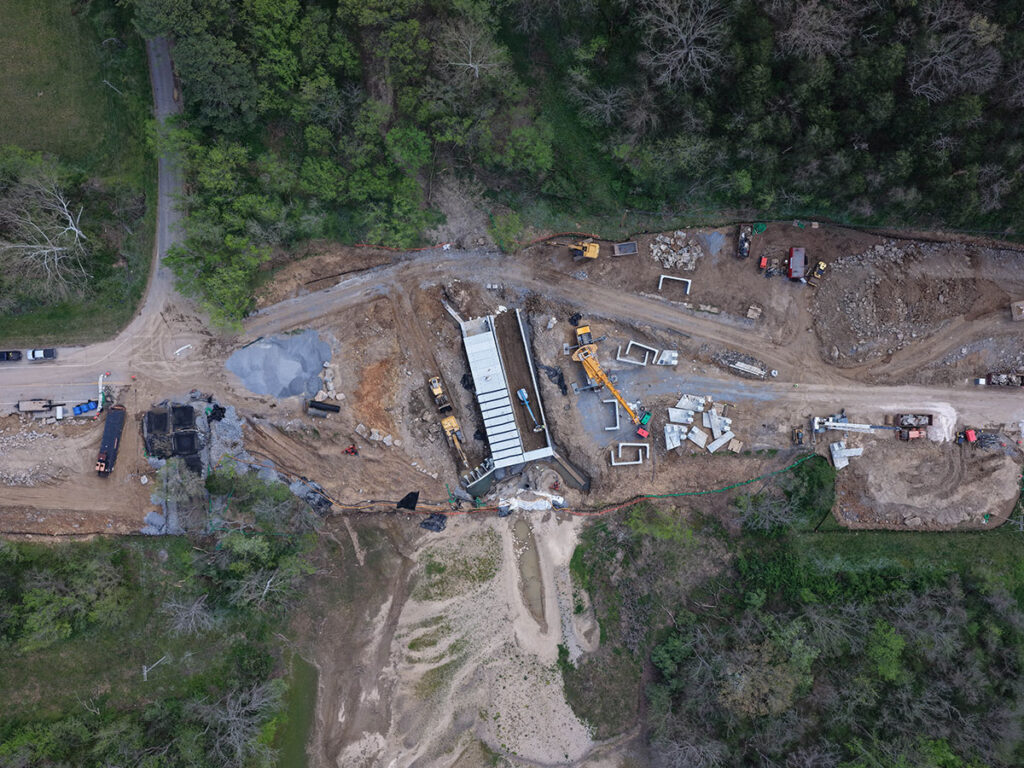
General contractor Cleary Construction excavated approximately 30 to 35 feet below the roadway to prepare the installation area. The precast sections were delivered ready for placement, eliminating the need to construct extensive formwork, place reinforcing steel and wait for cast-in-place concrete to cure within the excavation.
Once the sections were installed and aligned, crews could proceed with backfilling and roadway reconstruction.
Construction began Feb. 23, 2026, with the temporary closure of State Route 53 starting March 4. The project was completed on schedule in late May, allowing the roadway to reopen to normal traffic.
- 104 feet Length of the double-run precast box culvert system
- 18 feet by 17 feet Dimensions of each reinforced concrete box culvert run
- 30 to 35 feet Approximate depth of excavation and roadway cover
- 15 feet Diameter of each of the two deteriorating metal culverts replaced
- $1 million Cost of precast concrete
Why Precast?
Precast concrete provided the structural capacity and construction efficiency needed to replace large drainage structures beneath a heavily loaded state highway.
Structural strength: The reinforced concrete box culverts were designed to support approximately 30 to 35 feet of roadway cover along with live loads from highway traffic.
Improved drainage capacity: The larger box culvert openings provided greater hydraulic capacity than the existing deteriorating metal culverts, addressing the project’s need to improve stormwater conveyance and reduce upstream flooding risks.
Reduced on-site construction: Manufacturing the sections off-site eliminated extensive field formwork, reinforcement placement, concrete placement and curing within the deep excavation.
Faster installation: Precast sections arrived ready for placement, allowing crews to install the structures and proceed with backfilling and roadway reconstruction without waiting for an equivalent cast-in-place structure to cure.
Manufacturing quality: Controlled plant production supported consistent concrete manufacturing and quality control, independent of changing jobsite and weather conditions.
These advantages made precast concrete a practical solution for a large drainage replacement where construction efficiency, structural performance and minimizing roadway closure time were priorities.
Results
The State Route 53 culvert replacement was completed on schedule in late May 2026, restoring full roadway connectivity after a temporary closure that began March 4.
The completed system replaced two severely damaged corrugated metal culverts with 104 feet of dual reinforced precast concrete box culverts measuring 18 feet by 17 feet.
Off-site manufacturing reduced the amount of concrete construction required within the deep excavation, allowing crews to install the precast sections and proceed with roadway reconstruction more efficiently.
The replacement provides a larger drainage opening and a reinforced concrete structure designed to accommodate substantial roadway loads. The project also restored normal traffic operations along State Route 53.
Although the new system was designed to improve hydraulic performance and reduce flooding risks, the submission does not include post-construction flow measurements or documented flood performance.
- Written by:
- National Precast Concrete Association
- Source:
- TDOT Jackson County CNZ250 SR-53 Culvert Replacement, Built for Purpose Awards submission
- Published:
- October 26, 2026
- Last Update:
- Oct. 26, 2026