Bridging Habitats: Precast Creates a Wildlife Crossing Above a North Carolina Highway
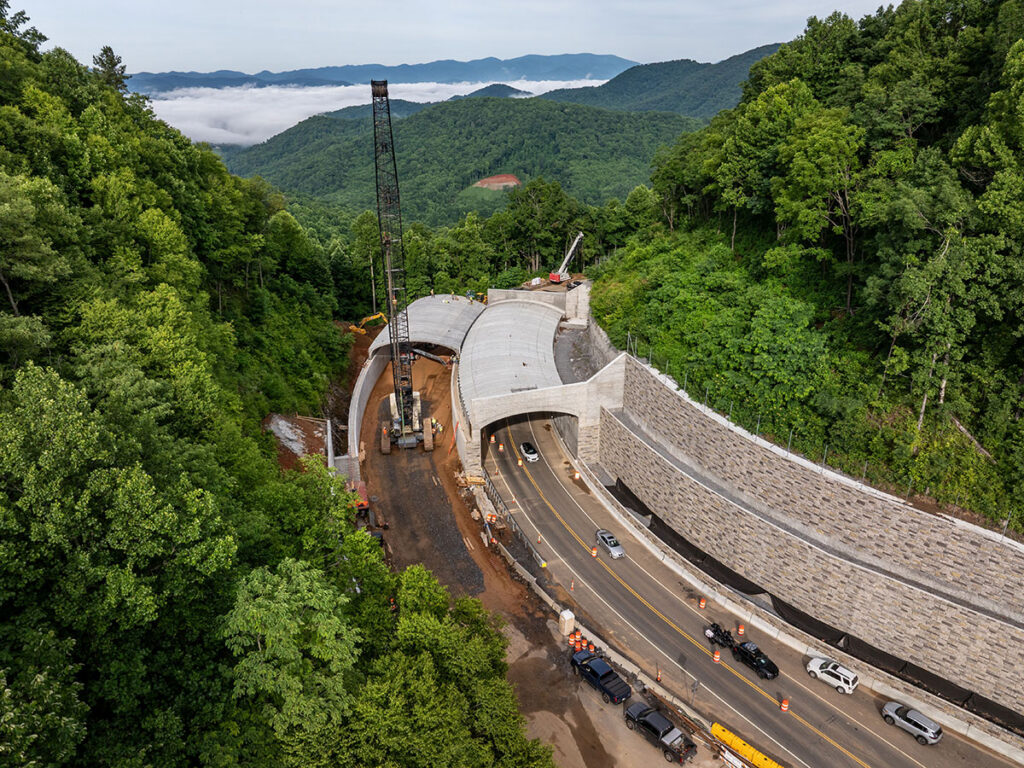
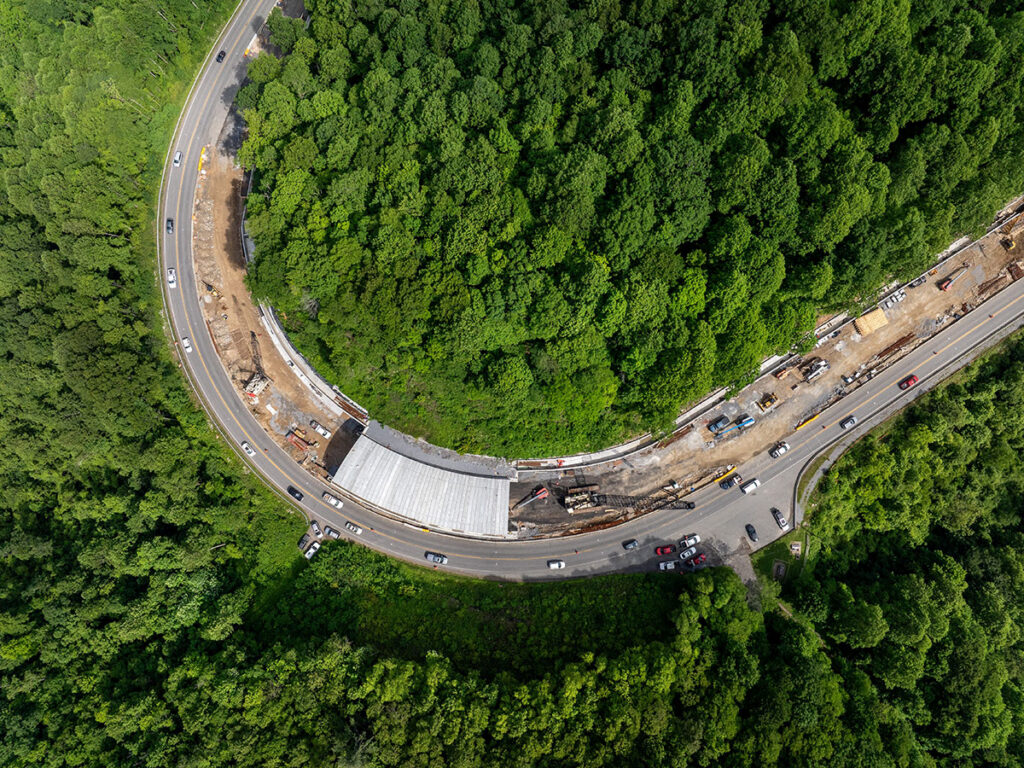
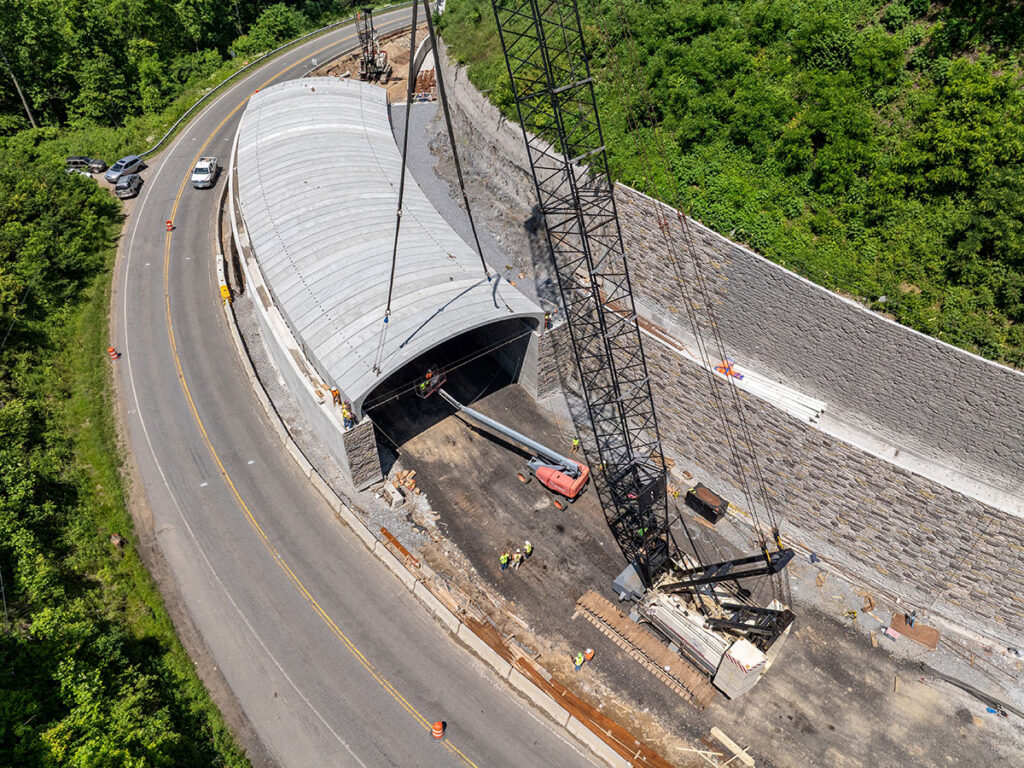
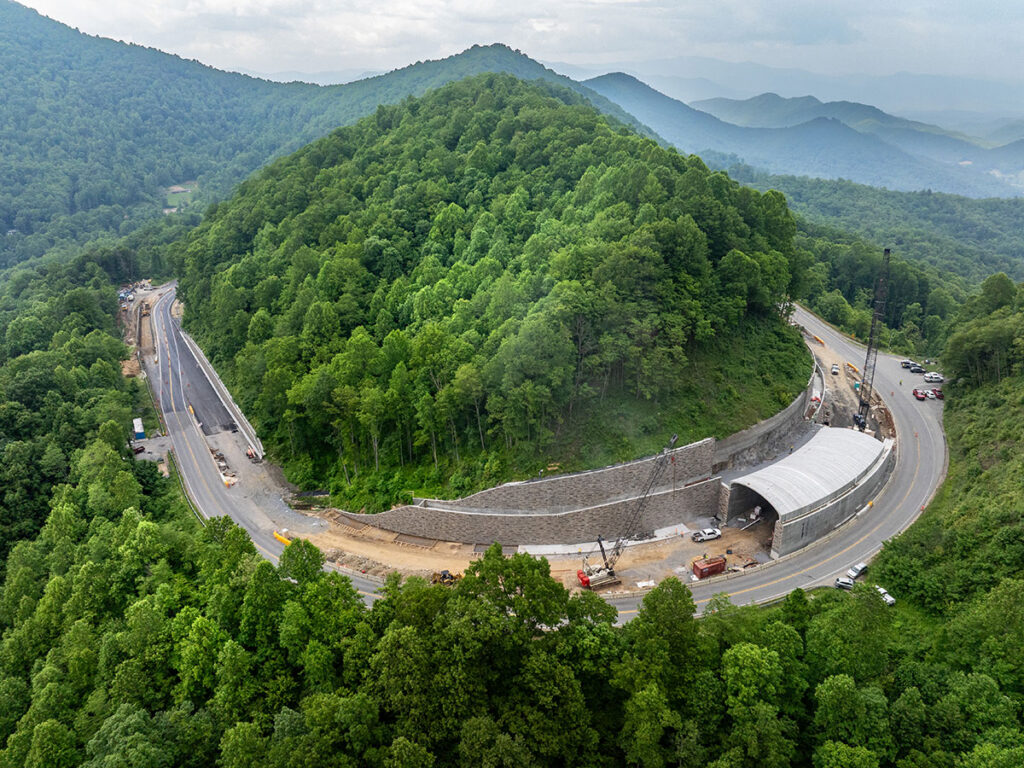
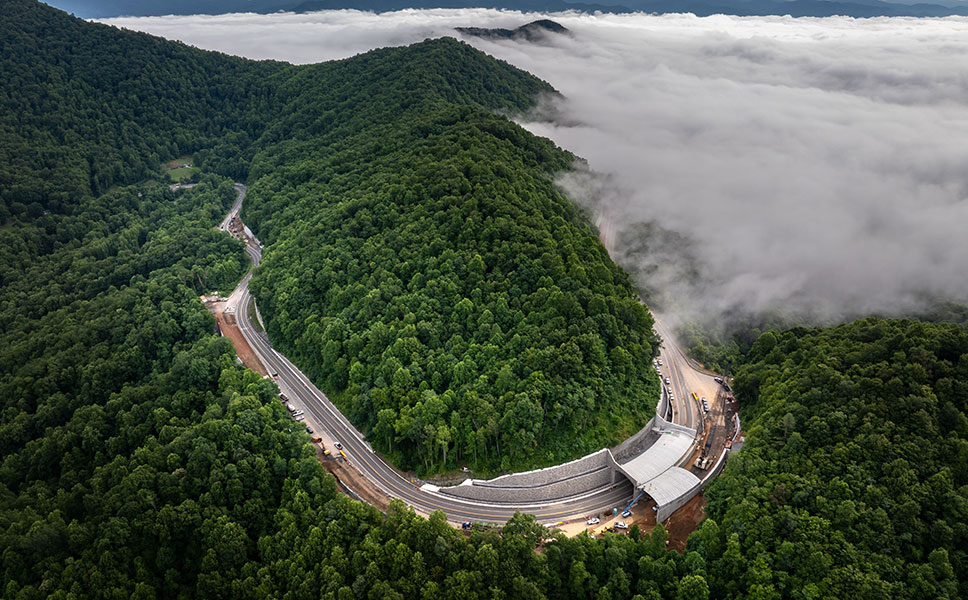
Expanding North Carolina Highway 143 through the Nantahala National Forest created a challenge: improving transportation while preserving safe passage for wildlife and Appalachian Trail users. In Graham County, North Carolina, the Stecoah Gap Wildlife Crossing uses precast concrete arches to support a vegetated land bridge above the highway. Tindall Corporation supplied the primary structural system, which accommodates the roadway's curved alignment and provides a foundation for wildlife habitat, native plantings and a relocated section of the Appalachian Trail. The crossing is designed to reduce wildlife-vehicle collisions and reconnect habitats separated by the highway.
Fast Facts
- Project Name:
- Stecoah Gap Wildlife Crossing
- Location:
- Graham County, North Carolina
- Precast Products Used:
- Custom Products, Specialty Products
- Precast Producer:
- Tindall Corporation
- Completion Date:
- June 26, 2026
The Challenge
North Carolina Highway 143 passes through mountainous terrain within the Nantahala National Forest, where steep grades, sharp curves, limited sight distances and changing weather conditions create challenges for motorists.
The roadway also divides wildlife habitat within the Appalachian migratory corridor, creating potential conflicts between vehicles and animals moving through the area.
Between 2015 and 2022, Graham County recorded 53 wildlife-vehicle collisions, including four near the proposed crossing location.
Planned climbing lanes associated with the Corridor K transportation improvements would widen the roadway, creating an additional barrier to wildlife movement.
The project team needed a solution that would accommodate the expanded highway while maintaining habitat connectivity and providing a safe crossing for wildlife and Appalachian Trail users.
The structure also needed to function within the mountainous landscape while supporting the region’s transportation, conservation and recreation objectives.
Precast Solution
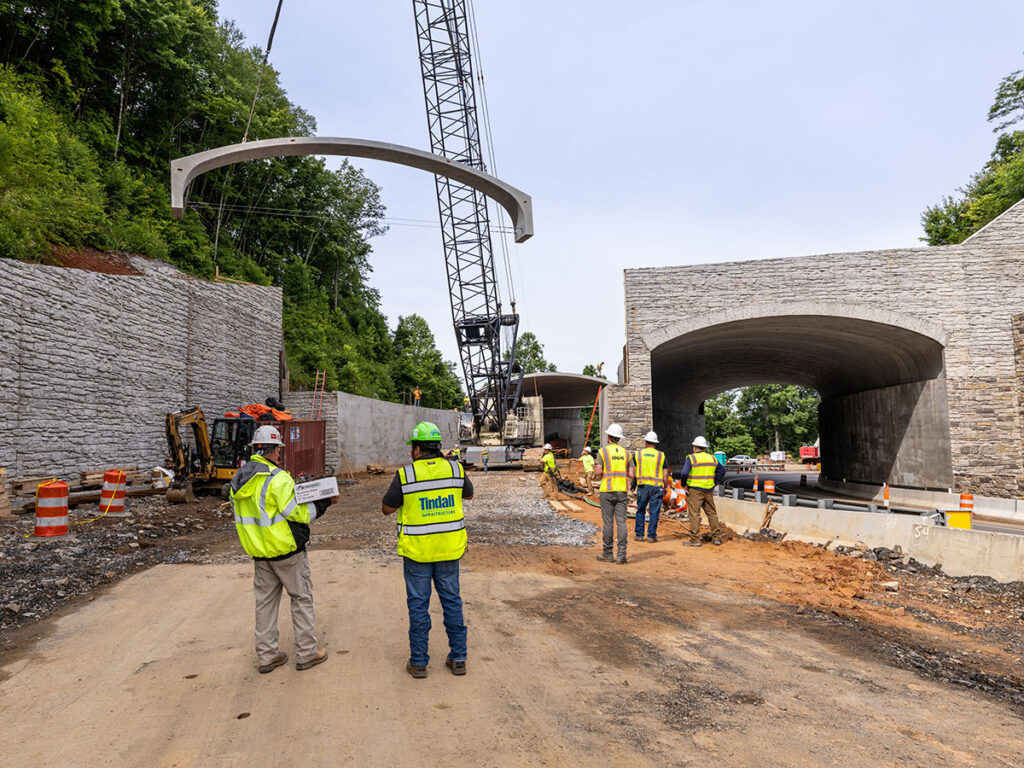
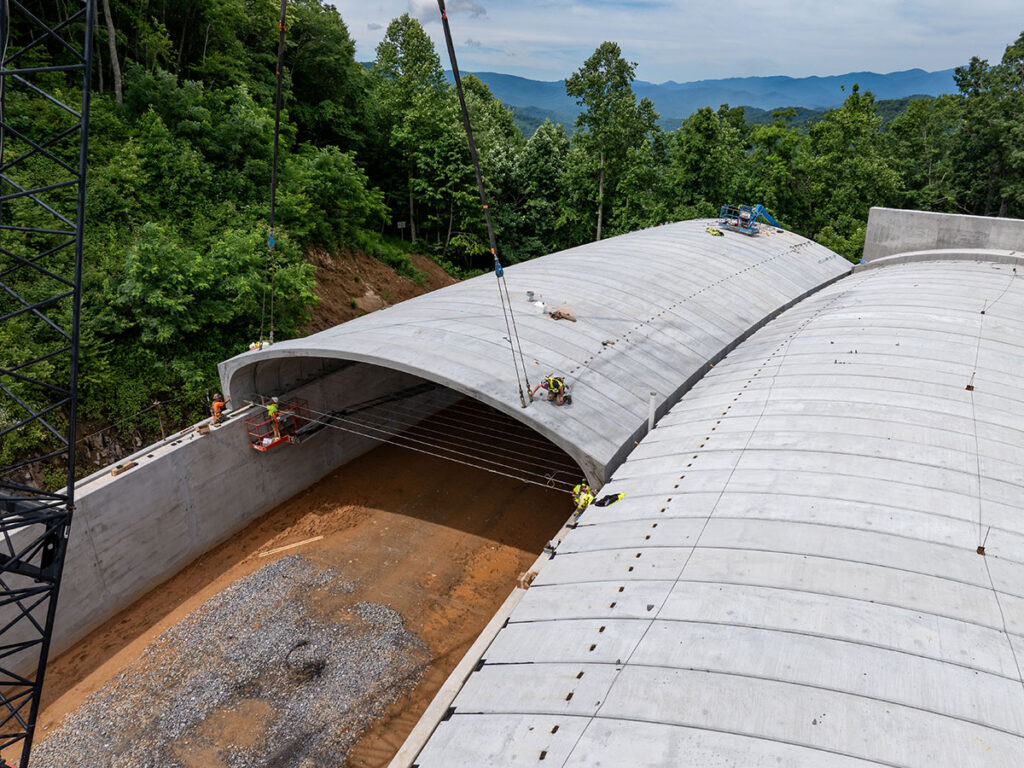
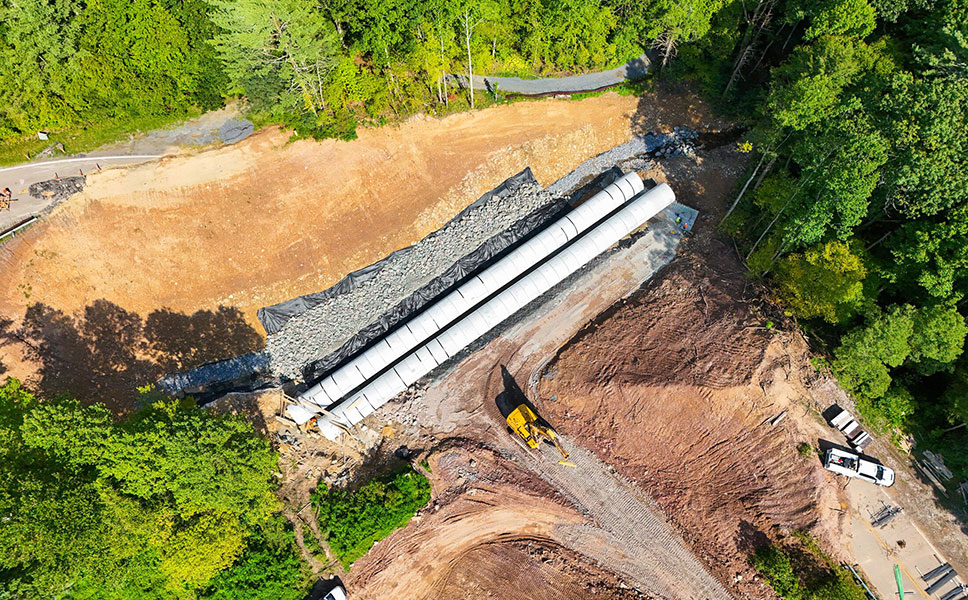
Tindall Corporation supplied a precast concrete arch system for a wildlife crossing above NC 143 at Stecoah Gap.
The structure incorporates precast concrete arches extending approximately 154 feet on the north side and 206 feet on the south side of the highway.
The curved arch design accommodates the roadway alignment while providing the structural foundation for a vegetated land bridge above the traffic corridor.
The crossing is designed to support wildlife movement, native plantings, associated habitat features and a relocated section of the Appalachian Trail.
Architectural form liners give the tunnel entrances the appearance of stacked stone, helping the completed structure blend with the surrounding mountain landscape.
The project also includes fencing intended to guide animals toward the crossing and discourage movement across the highway itself.
- 154 feet Approximate length of the precast arch structure on the north side of NC 143
- 206 feet Approximate length of the precast arch structure on the south side of NC 143
- 53 Documented wildlife-vehicle collisions in Graham County from 2015 through 2022
- $12 million Cost of precast concrete
Why Precast?
Precast concrete provided the structural system needed to support a naturalized wildlife crossing above an expanded mountain highway.
Structural capacity: The precast arch system forms the foundation for the land bridge, supporting soil, vegetation, wildlife movement and Appalachian Trail users above the roadway.
Adaptability: The curved arch configuration accommodates the highway’s alignment while creating the space needed for vehicles to pass beneath the crossing.
Construction efficiency: Manufacturing structural components off-site allowed precast elements to be produced before installation, supporting construction of the crossing within an active transportation corridor.
Durability: Precast concrete provides a structural foundation designed for long-term service in the mountainous environment of western North Carolina.
Architectural flexibility: Form liners allow the tunnel entrances to resemble stacked stone, integrating the engineered structure with its natural surroundings.
These characteristics allowed the project team to combine a highway crossing, wildlife corridor and recreational trail connection within one structure.
Results
The Stecoah Gap Wildlife Crossing provides a precast concrete structural foundation for a vegetated land bridge over NC 143.
The project was designed to maintain wildlife habitat connectivity across the highway while accommodating roadway widening associated with the Corridor K improvements.
The crossing also provides a route for a relocated section of the Appalachian Trail, supporting recreational access through the area.
Together with wildlife fencing, the structure is intended to encourage animals to cross above the roadway rather than entering traffic. Species expected to benefit include black bears, deer, bobcats, coyotes, elk, reptiles, amphibians and other wildlife.
The project illustrates how precast concrete infrastructure can accommodate transportation improvements while providing space for wildlife movement and recreation.
- Written by:
- National Precast Concrete Association
- Source:
- Stecoah Gap Wildlife Crossing, Built for Purpose Awards submission
- Published:
- October 27, 2026
- Last Update:
- Oct. 27, 2026